
- Tags:
- Forest Journal,
- Recreation,
- Education
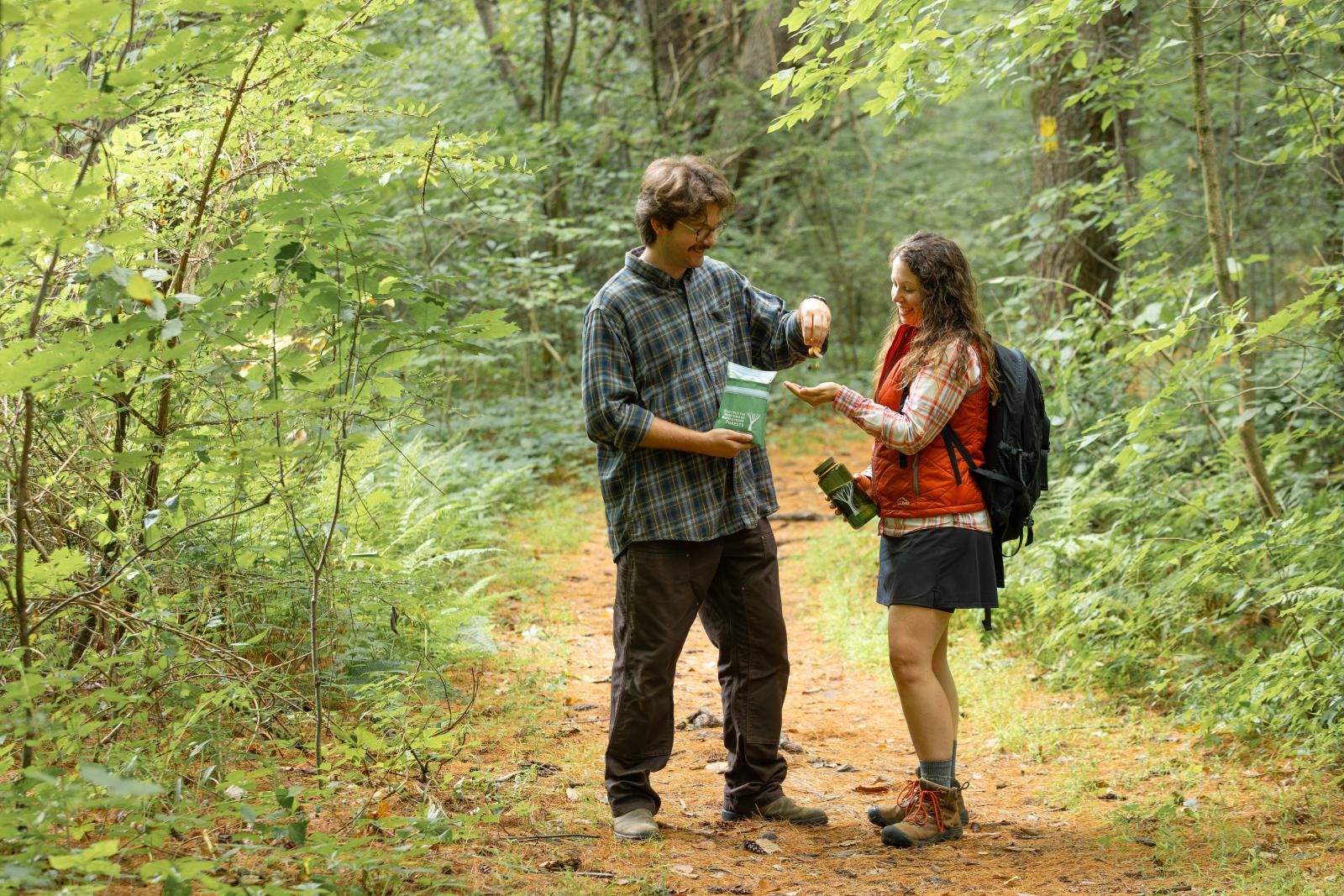
Hikers participate in the Five Hikes Challenge with their new Forest Society snack bag!
Very few of us want to hear that summer is winding down, that the bright, hot days filled with morning birdsong and midafternoon cicada whine are coming to an end — but there is a silver lining.
We’re about to enter the best season for hiking, spanning the end of summer and well into autumn.
The blackflies and deerflies are gone, mosquitoes are fading quickly, and the drier, cooler days mean a reduced threat of surprise thunderstorms and uncomfortably sticky, sweaty exertion.
Plus — the views! New Hampshire is a hiker’s paradise, with everything from rugged multiday mountain-scaling adventures to gentle meanders along forested brooks.
Once foliage season is in full swing, hikers will have to compete with the weekend leaf-peepers flying or driving in from afar to experience the state’s natural beauty, but for those who know where to head, there are dozens — even hundreds, dare I say — of stunning hikes where you’re unlikely to encounter more than a handful of others.
For a good way to get outside during the best hiking time of the year, consider participating in the 2026 5 Hikes Challenge, which takes advantage of the Forest Society’s statewide portfolio of more than 200 conservation forests to introduce people to new and varied hiking destinations in every corner of the state.
This year’s challenge theme, “Fuel Your Hike, Feed Your Spirit,” recognizes the positive benefit that time spent outdoors can provide from a mental health perspective.
I can say with certainty that I’ve not regretted a single hike I’ve ever taken in the woods. Some days I have to drag myself out there — my dog usually assists, whining until we go — but I am always glad I made the effort and invariably experience something magical on even the shortest of woods walks: flushing an early-morning owl from its roost, watching mist rise off the surface of a pond or discovering a perfect wildflower growing alongside the trail.
Fueling hiking adventures in a more literal sense is important, too. For a safe and enjoyable experience on the trail, a little advance planning can go a long way. Here are some tips for optimum hydration and nutrition on day hikes, whether tackling a 4,000-footer or just the easy grades of a fall woods road.
Eat early, lightly and often
It can be hard to remember to eat while hiking, since you’re busy moving and enjoying the scenery. Plus, it’s common not to feel very hungry while actively exercising. However, hikers are burning calories — typically 200 to 300 per hour — and failing to replace them regularly can lead to a “bonk,” or a point of extreme tiredness and sluggishness.
Sports nutritionists often suggest eating small snacks every 60 to 90 minutes, whether hungry or not. Hikers can set a watch or phone alarm for this purpose, or bring along a small child — in my experience, they never fail to remind you about the need for snack breaks.
Think carbohydrates first, then fats, then protein
So, snack frequently — but on what? Carbohydrates are the name of the game, since they provide fast, efficient fuel the body can easily convert to energy. Calorie-dense fats like nuts are also good and digest slowly to provide longer-lasting energy.
There’s a reason trail mix earned its name — the combination of fatty nuts and chocolate along with carbohydrate-rich dried fruits makes it one of the best, easy-to-eat hiking foods.
Don’t let the current fad of protein-everything tempt you too much. There’s nothing wrong with protein on a hike as long as carbohydrates are in the mix, too, but a diet of only hard-boiled eggs and meat sticks may leave hikers cranky and exhausted.
Pack snacks strategically
Loading up a backpack with heavy items can make for a challenging hike, so think lightweight when packing trail snacks — pretzels, peanut butter crackers and granola bars are great choices.
A mix of sweet and savory snacks will guarantee tastebuds won’t get bored. Most hiking destinations in the state are carry-in, carry-out, so bringing snacks in reusable, reclosable containers is best to minimize food and wrapper waste.
Even biodegradable waste like apple cores and fruit peels should be packed out on busy hiking trails so they don’t attract animals and become an eyesore for other hikers. It just takes a little advance planning — like peeling a tangerine before packing it — to avoid carrying out the rind.
Be a hydration hero
Drinking water frequently while hiking is every bit as important as eating. Bring at least a liter of water on any hike lasting two hours, and a second liter if it will be hot, steep terrain or longer than two hours. Remembering to drink regularly is the real trick, since waiting until you’re very thirsty means you are already significantly dehydrated.
Many hikers find a CamelBak or other bladder-and-straw hydration system helpful, since it eliminates the need to stop and fish a water bottle out of a pack. It’s also a good idea to add electrolytes to replace the salts and minerals lost through sweating. Electrolyte powders and tablets are available at grocery stores, or hikers can make their own drink by adding pinches of salt and sugar to water to taste — a little squeeze of lemon works well, too.
Now that you’re ready to fuel your hike and your spirit of adventure, you can stop dreading the end of summer and look forward to the best season outside in New Hampshire’s woods and mountains. More information about the Forest Society’s 5 Hikes Challenge, which runs through Oct. 31, can be found at https://www.forestsociety.org/Fivehikeschallenge2026.
Challenge yourself this season to take at least five hikes, on your own schedule, with difficulty levels and locations of your own choosing. Happy trails!