
Use this handy glossary to help navigate the terminology involved with a timber harvest!
Bump tree – A tree marked to be left standing to protect wetland or other trees behind it from machinery
Cable Skidder – A machine used to drag sawlogs to the landing, trees are attached by cables or chains
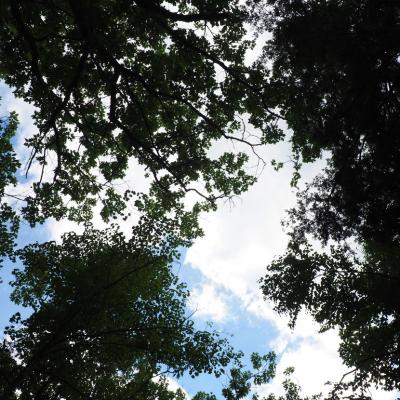
Canopy – The uppermost layer of a forest, the tops of trees
Closeout - The process of cleaning up a forest after a timber harvest so that it can properly regenerate
Consulting Forester – Hired by Forest Society foresters to manage and coordinate a timber harvest
Crane and Slasher Processor – Machinery used on a landing in a whole-tree harvest which cuts felled trees into products
Ecoreserve – A reservation where forestry is not practiced
Feller buncher – Motorized logging machine which can cut and hold more than one tree at a time
Forest stand – A group of trees in a forest with a sufficiently uniform species composition, age, and condition and is managed as a unit
Forester – A person who manages and cares for trees and forests
Forestry - The science of developing, caring for, or cultivating forests
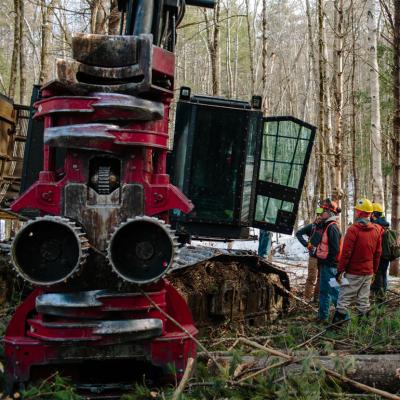
Forwarder – A vehicle which carries sawlogs from the forest to the landing
Grapple skidder – A machine which holds several felled trees in a “claw” and drags them to the landing
Landing – A clearing on the edge of a timber harvest where logs are sorted and loaded onto trucks for shipment to a processing plant
Logger – The person in a timber harvest who does the actual cutting of the trees
Overstory – The upper section of a forest including the tops of the tallest trees and their foliage
Pole ford – A temporary bridge used to protect wetlands or streams from logging machinery
Prescription - What the forester decides will be best for a forest following an inventory. This could be a timber harvest, but it could also be something else, like letting it grow for another 15 years.
Reservation – Land protected for public pedestrian use by the Forest Society and managed by foresters
Sawlogs – Cut timber ready to be processed into products
Scarification – The loosening and turning of the surface of the soil, helps with regeneration
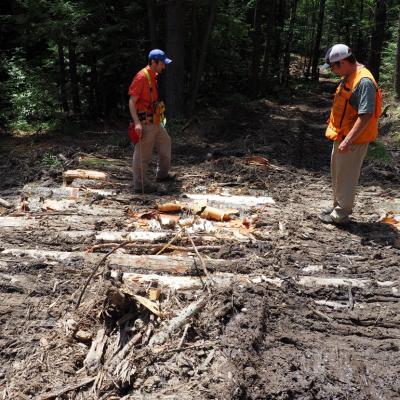
Skid Trail – The path through the woods used by loggers and machinery to move between the harvest and the landing
Slash – Woody material left behind in the woods after the harvest, including branches and the tops of trees
Understory – The foliage below the canopy, including shrubs, plants, and young or small trees
Want to learn even more timber terminology? Try this glossary created by the US Forest Service!