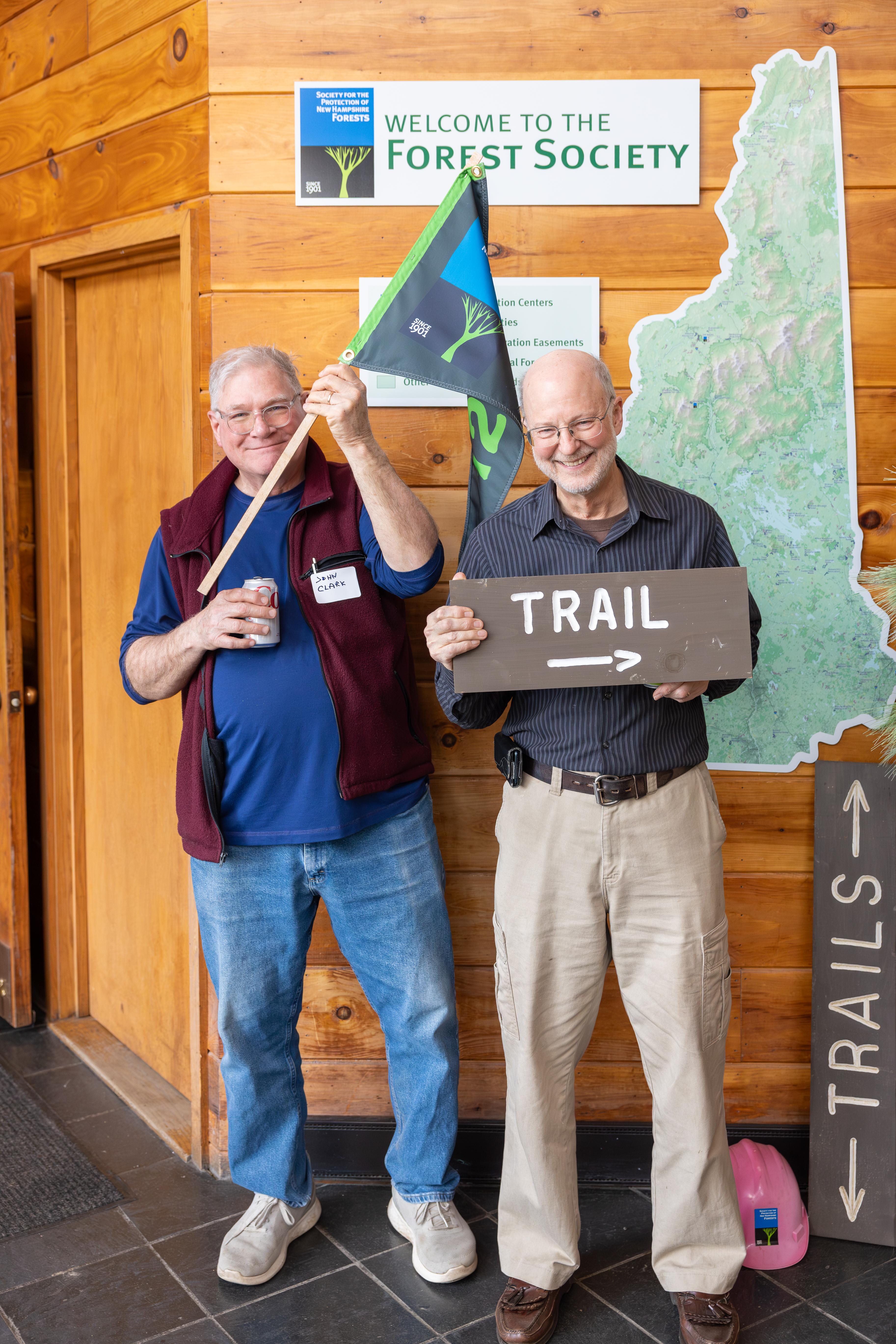
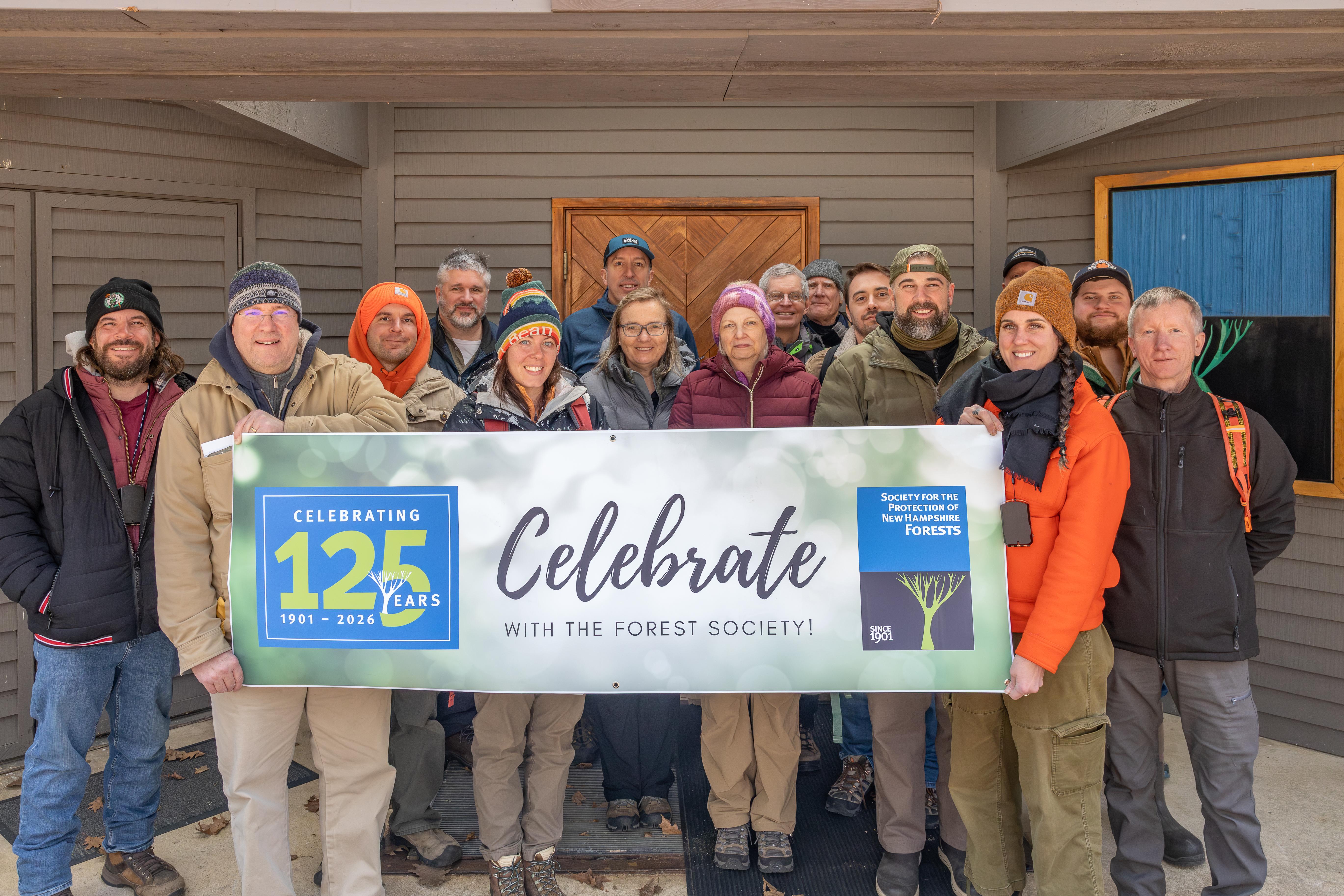
Sixteen new volunteer Land Stewards spent a full Saturday in early spring with Forest Society staff at the Conservation Center in Concord for our annual Land Steward Field Day. After two months of virtual training sessions, the Field Day allowed new Stewards from across the state to meet in-person, hone their stewardship skills, test their knowledge, and—as a bonus celebration to fete the organization’s 125th anniversary—nosh some cupcakes and raise a glass.
With this new class, the Forest Society’s cohort of Land Stewards grows to 184 volunteers helping monitor and manage approximately 180 properties across 60,000+ acres throughout New Hampshire.
These volunteers are an essential part of the Forest Society’s land management operations; they visit properties, walk trails, assess and improve recreational infrastructure, and catalog cultural as well as natural resources. Not only do these important tasks help ensure that the conservation value of our lands is maintained in perpetuity, it also helps the Forest Society do this nimbly and effectively with a reduced carbon footprint. With proper training and resources, volunteer Land Stewards monitoring properties in their local communities offers up-to-date information and quick response time to issues without the Forest Society’s staff having to drive all over the state and/or use expensive remote monitoring technology.
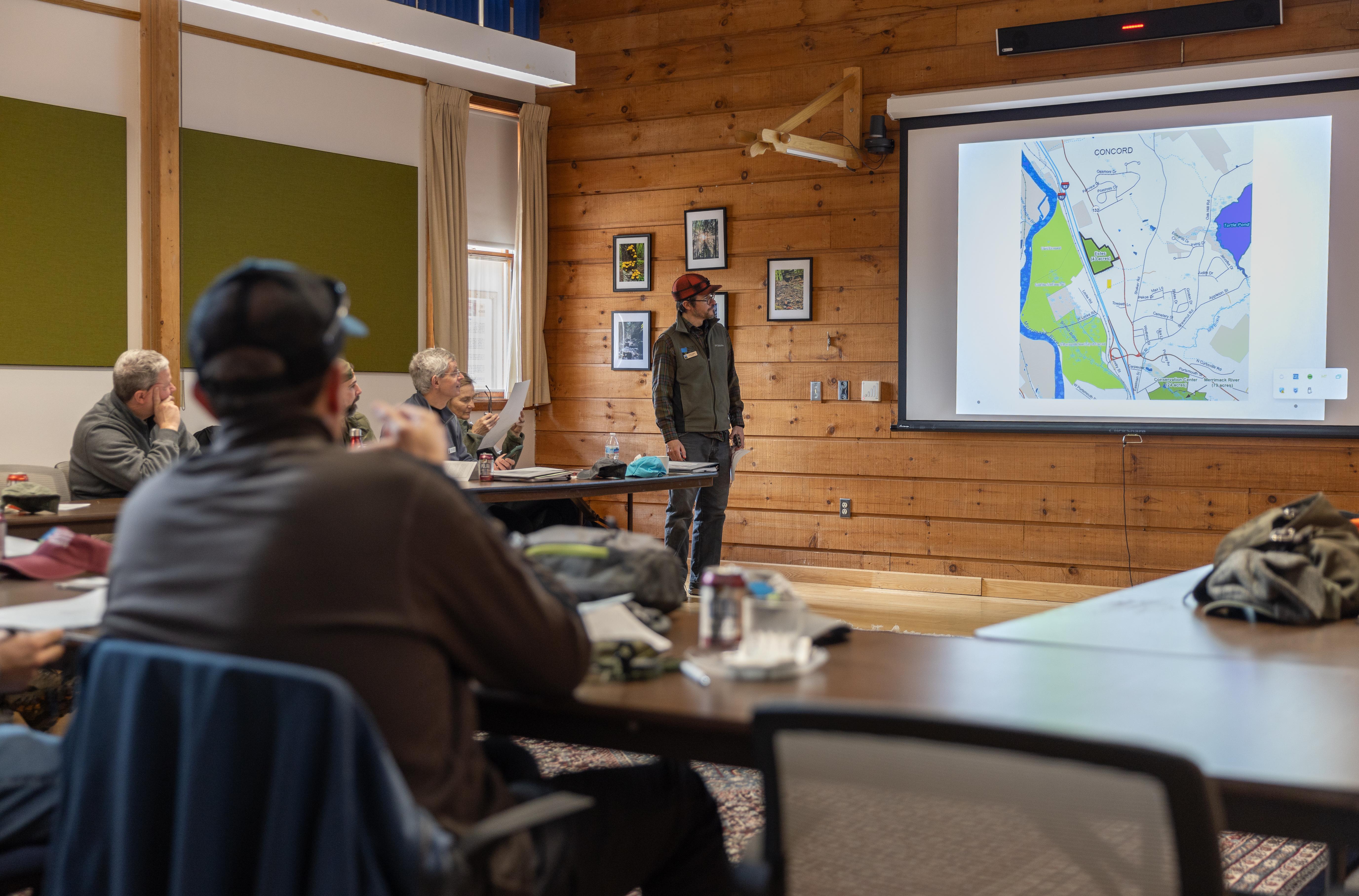
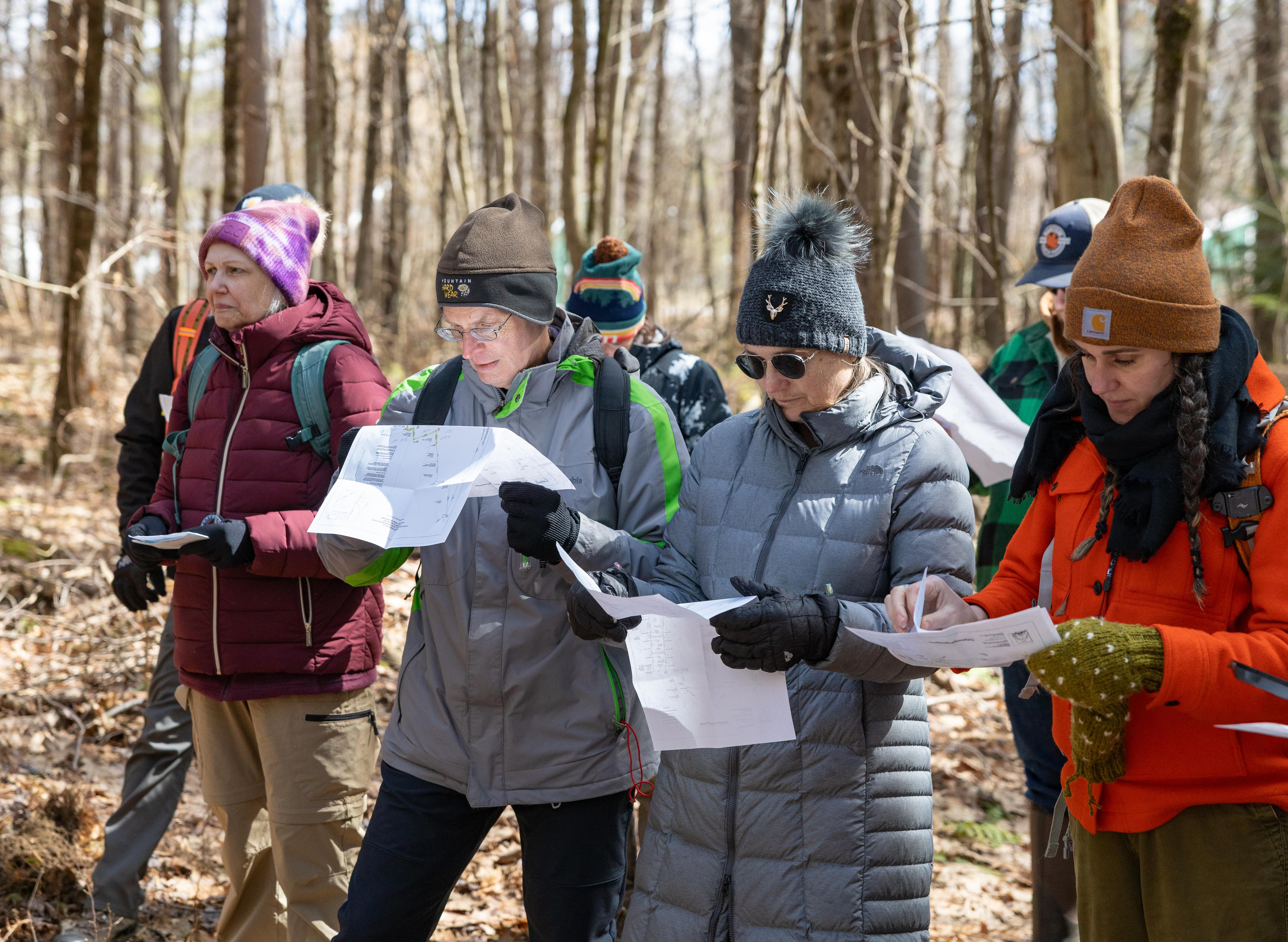
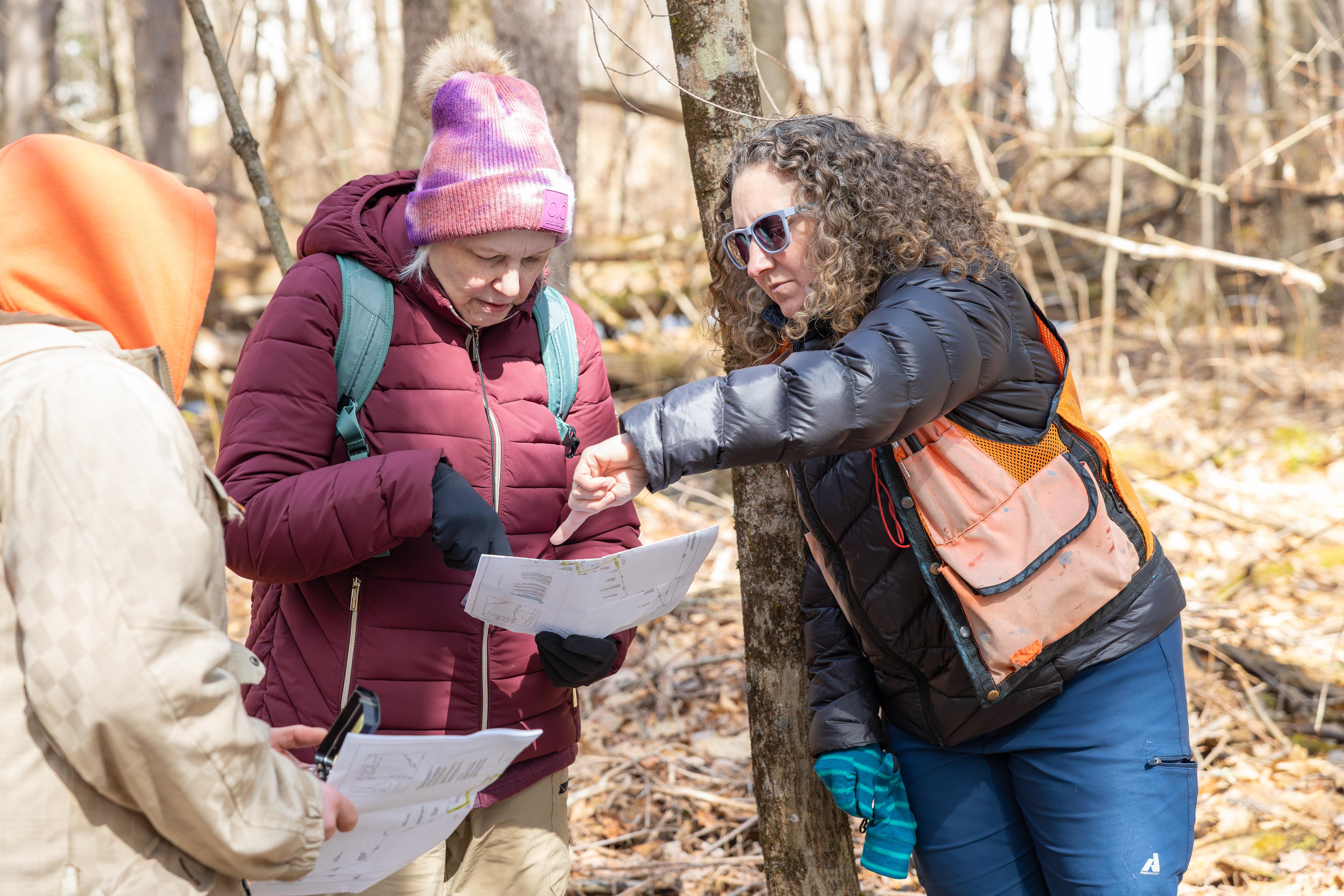
Field Day started with classroom time: staff introductions, an overview of the field markings our forestry team uses, and a deep dive on how to read and understand deed plots and boundary lines. Eager to get outside on a sunny day, staff and volunteers headed down to the Merrimack Floodplain Trail to talk through common property access and trail improvement issues they’d likely come across such as attending to rusty gates, repairing signage, and clearing blowdowns along a trail. Bigger issues like bridge replacements or degrading culverts would certainly need Forest Society staff to tackle—and much of the day was about empowering volunteers to understand when and how to request additional resources.
Property monitoring goes far beyond recreational infrastructure, however; volunteer Land Stewards keep the Forest Society updated on important changes to natural resources (tree stand health, invasive species, etc.) and cultural resources (historical structures, archaeological remnants, memorials, etc.) Assessing how natural and cultural resources interact with the conservation value of a property is a complicated undertaking for staff—there may be legal implications or needed changes to a forest management plan—but being looped into those changes via volunteers is an enormous help. With cultural resources it can be particularly nuanced: does a group of arranged objects found on a property count as litter, a memorial, or an art installation? Staff staged this exact scenario for the volunteers using toy dinosaurs to come upon at the Floodplain Trail and as a group they discussed how to log the discovery on a mobile platform that sends visual and mapping data to the Forest Society. Group consensus: probably just some Jurassic Park playtime in this case.
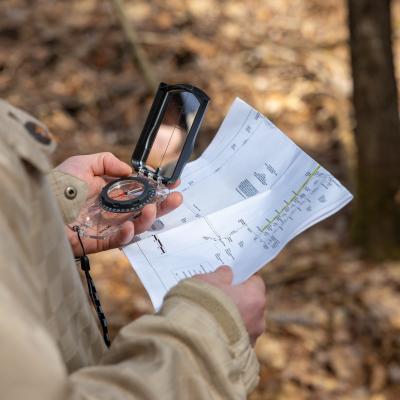
Later that day, the Forestry team led our volunteers on a surveying exercise at a nearby Forest Society property. Thickly wooded with crisscrossing game trails and abutting residential plots, it was the perfect location to test the group’s understanding of property boundaries and boundary markings, reading deed plots, and orienteering/compass skills.
Those out-in-the-woods experiences for volunteers—walking a property, deeply learning the character of a piece of land and helping to improve it—tend to be the draw. “I had been a subscriber to Forest Notes for several years,” said Dave Paquette, a new volunteer Land Steward for the Mt. Major/Alton Bay area; yet the decision to join the Forest Society as a Steward came after joining a friend and long-time Land Steward, Gene Young, for a trail maintenance day at Cooper Cedar Woods in New Durham last year. “Gene inspired me to get involved. The work that day was strenuous but rewarding and filled with laughs. We replaced several rotted walking planks. Those planks are as heavy as cars! That experience set the hook.”
For some volunteer Land Stewards, conservation work by the Forest Society in their local community served as the inspiration. That was the case for Kerri Murphy, a wildlife photographer and avid adventurer in this year’s cohort of volunteers. In 2023—just a year after Murphy moved to Shelburne to be more immersed in nature—permanent protections were put in place for the Shelburne Valley Forest as part of the Mahoosuc Highlands Initiative. “I knew I wanted to be involved so I could merge my love of nature with practical, hands-on action,” said Murphy. She’s now a volunteer Land Steward and a member of Shelburne’s Conservation Commission. “Field Day allowed me to form and strengthen relationships with the Forest Society community and complete the training needed to feel comfortable in my land steward duties.”

Back at the Conservation Center, our new volunteer Land Stewards were presented with certificates of completion representing months of training, both online and in-person, to build stewardship knowledge and important practical skills—all in service of our lands and communities. Just as the certificates were being handed out, Forest Society staff, board members, donors, and additional volunteers streamed into the Conservation Center to celebrate our newest class of Land Stewards as well as the Forest Society’s 125th anniversary. While we can’t guarantee that all our volunteer trainings will include cupcakes and after parties, we can be sure that they’ll always include the tools, resources, and skills that volunteer Land Stewards need to effectively monitor and manage our lands—as well as a heartfelt thank you for taking on a role so important to our organization and mission.