Most people don’t ponder all the elements that make a nature experience feel welcoming – the clear wayfinding, sturdy infrastructure, or thoughtful reroutes that avoid erosion and hazards. Yet these behind-the-scenes details shape every visitor’s time on our lands. That’s why our staff works year-round to plan and prioritize recreational improvements across Forest Society forests. As more people seek the physical, mental, and emotional benefits of being outdoors, the demand for well-designed, accessible, and resilient spaces continues to grow.
Each year, our staff assesses properties that should be prioritized for rehabilitation or upgrades and then implements plans for stewardship projects that focus on improving the visitor experience. Goals for each project can include improved sustainability, improved accessibility, and long-term maintenance. With over 200 properties statewide and a handful of staff, we simply cannot work towards these goals on our own. We rely on our volunteers and hire trail contractors to support this type of stewardship.
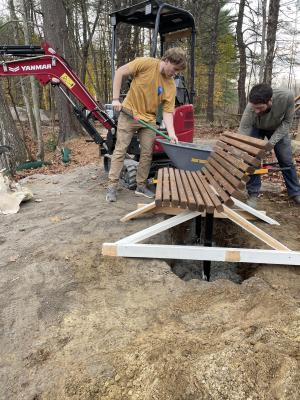
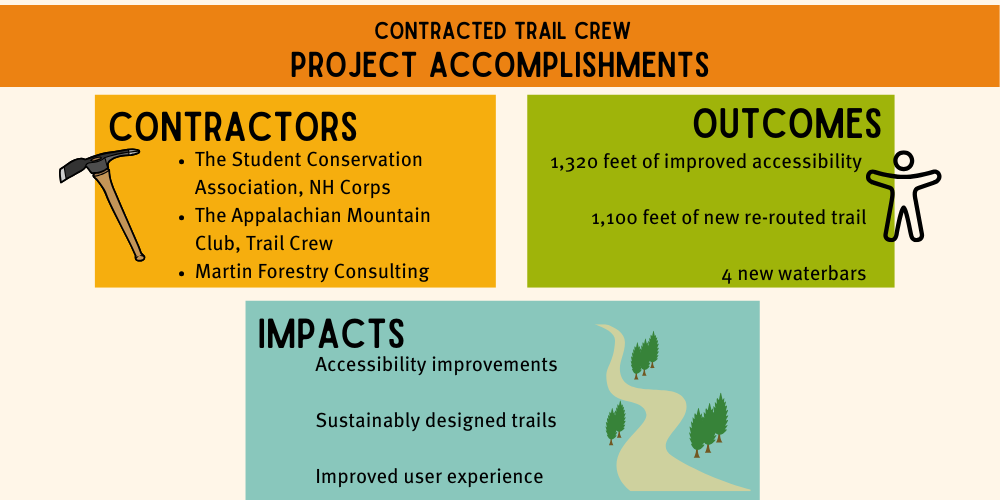
In 2025, three major stewardship projects were completed with the help of professional trail contactors. Dylan Summers, Forest Society Stewardship Project Manager, notes that “trail contractors are sought out for projects that are large in scope, highly technical, or difficult to access.” A notable, complex project this year was the accessibility upgrades along the Merrimack River, on the land we lovingly call the floodplain. This project required heavy equipment and specialized materials to improve the trail to meet federal accessibility standards. The result is a route that remains true to its scenic character while becoming more welcoming to those using wheelchairs, mobility aids, or strollers.
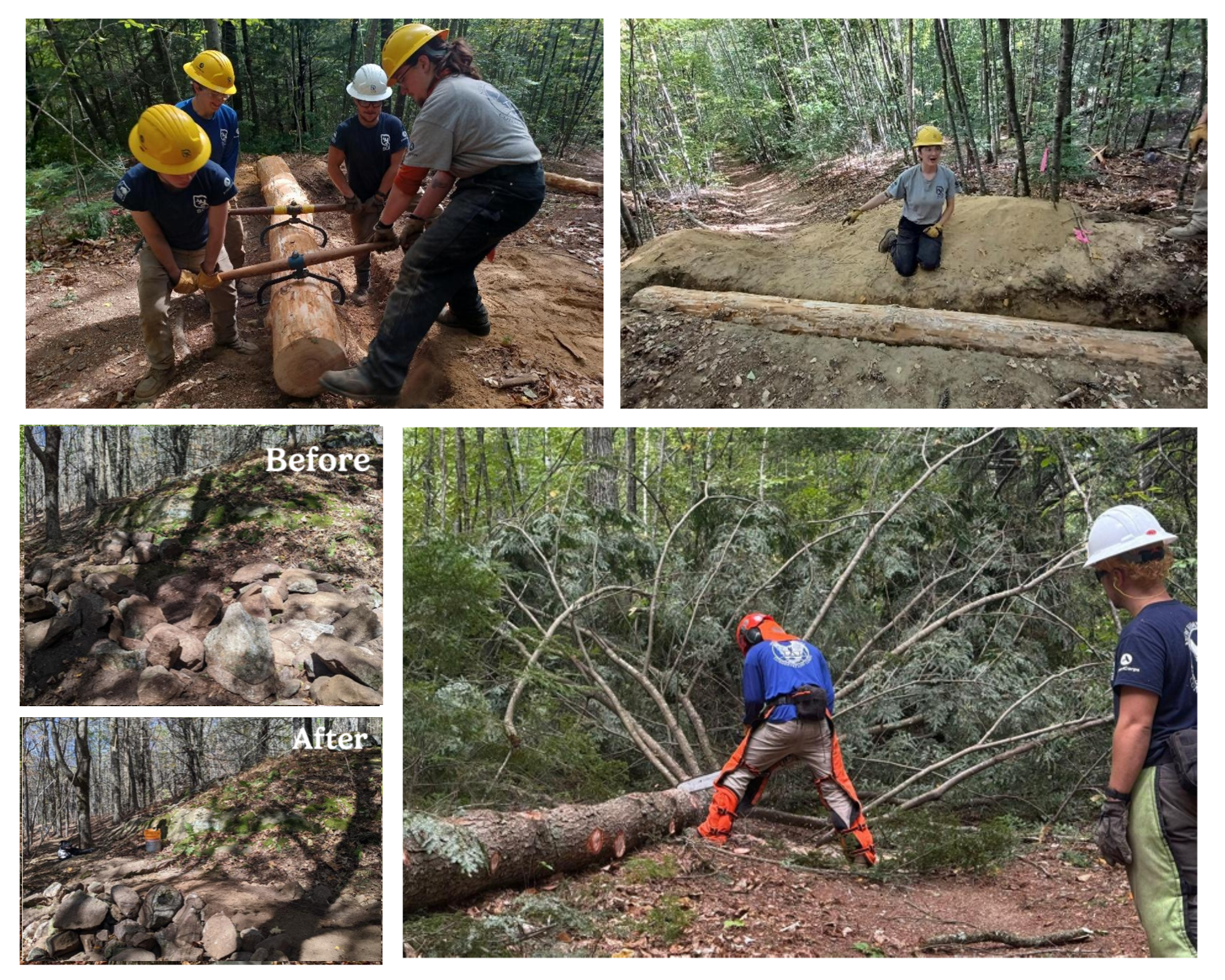
Our 200th conserved forest, Bean Forest, in Farmington, received some TLC with new drainage features and a short trail reroute designed to make the existing paths more sustainable. Stabilizing—or avoiding—areas where water naturally flows is essential to keeping trails resilient in a changing climate.
At Gap Mountain in Troy, a crew worked to reroute the trail to a sustainable grade. Summers described this as “a large project that became even more challenging to execute when navigating terrain hidden under the organic layer of the forest floor. In the end, solutions were found with a high-quality trail as the result.” Unfortunately, this large project did not cross the intended finish line and will be an excellent opportunity for volunteers to join us in 2026!
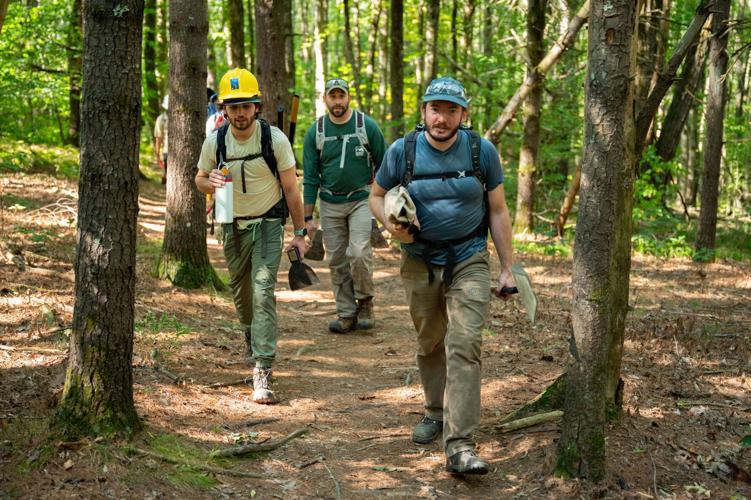
There are many types of recreational opportunities in the wild spaces of New Hampshire, not just hiking, biking, fishing, or hunting. One of the most enjoyable recreational opportunities is volunteering for an outdoor organization, like the Forest Society! Individuals and groups find their way to us in a number of ways. No two paths are identical, but we are thankful for each person’s engagement in supporting conservation efforts. This year I learned that long-time volunteers Gale and Fred Tobbe found their way to us 35 years ago, via a newspaper ad for an upcoming guided hike with Dave Anderson, which was just the start of their journey with the Forest Society. This year there were over 100 new volunteers in the stewardship department – some found their way to us via our website and others through their employer or school group. Some of the new groups that joined us included Trailwrights, REI Bedford, and the Wediko School. Many of them joined workday crews as a good way to connect with like-minded people in a place that they enjoy visiting.
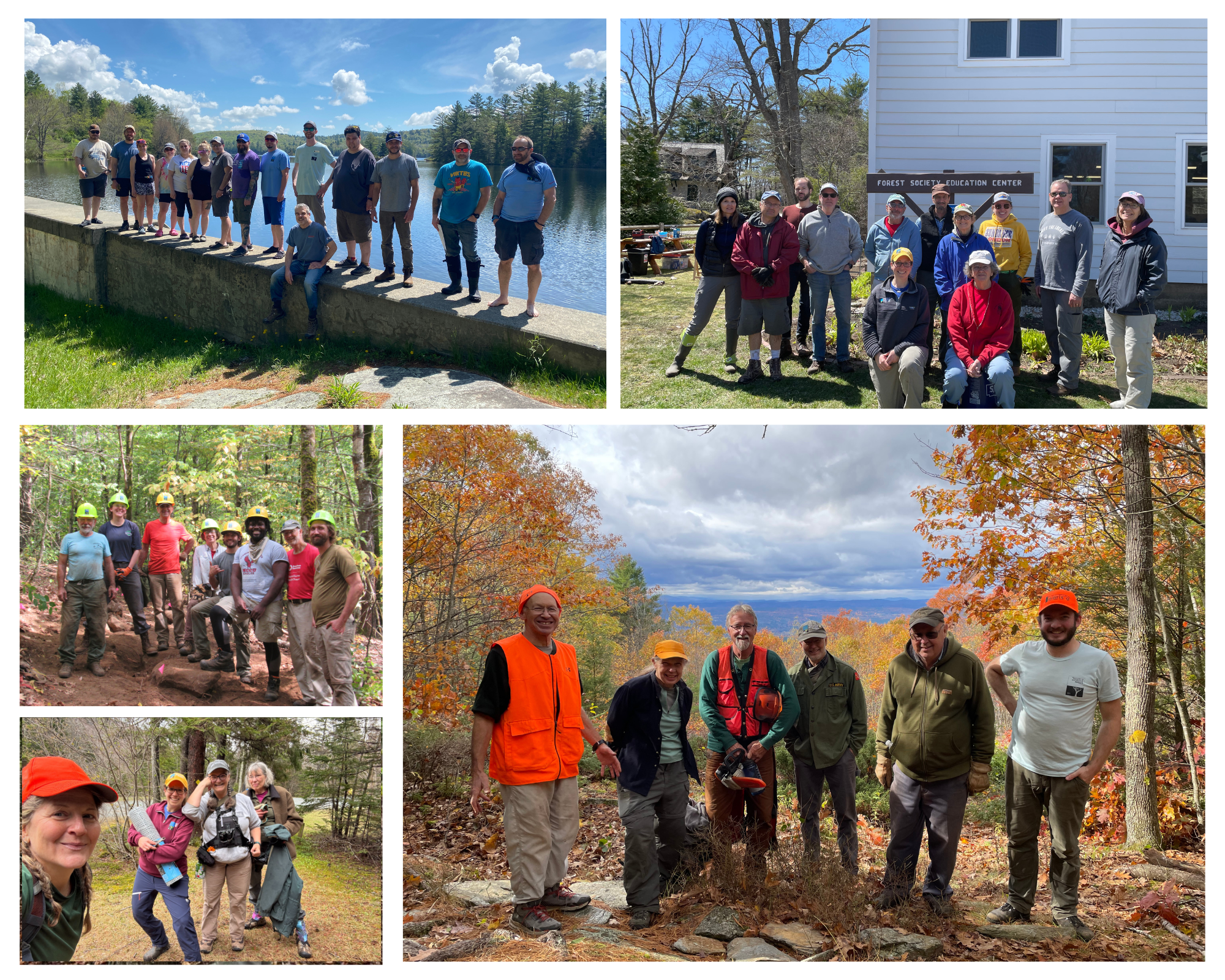
After a long day on the trail, one volunteer commented that the most enjoyable part of their experience was “giving back to the Forest Society for the purpose of others being able to enjoy the opportunity to hike great trails.”
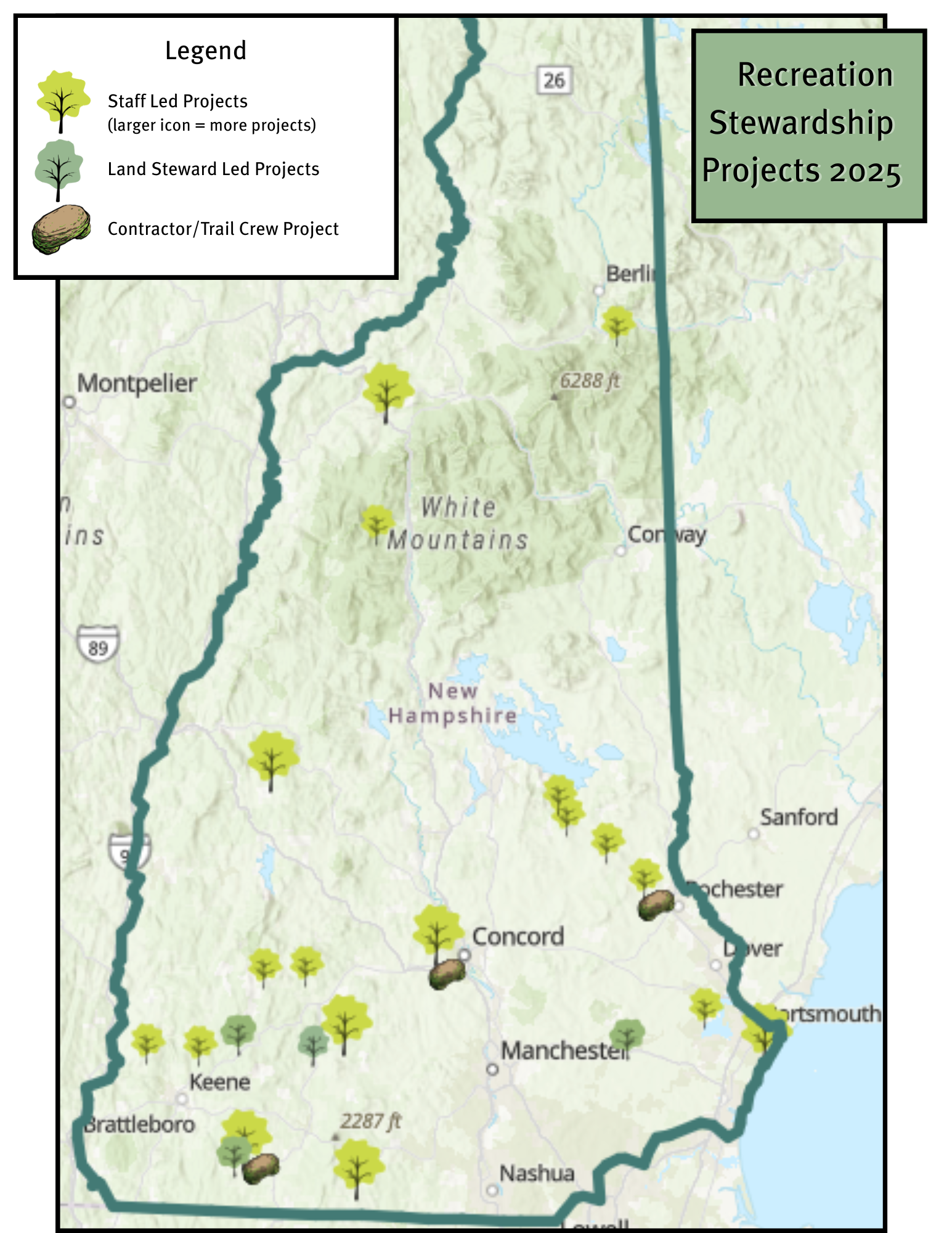
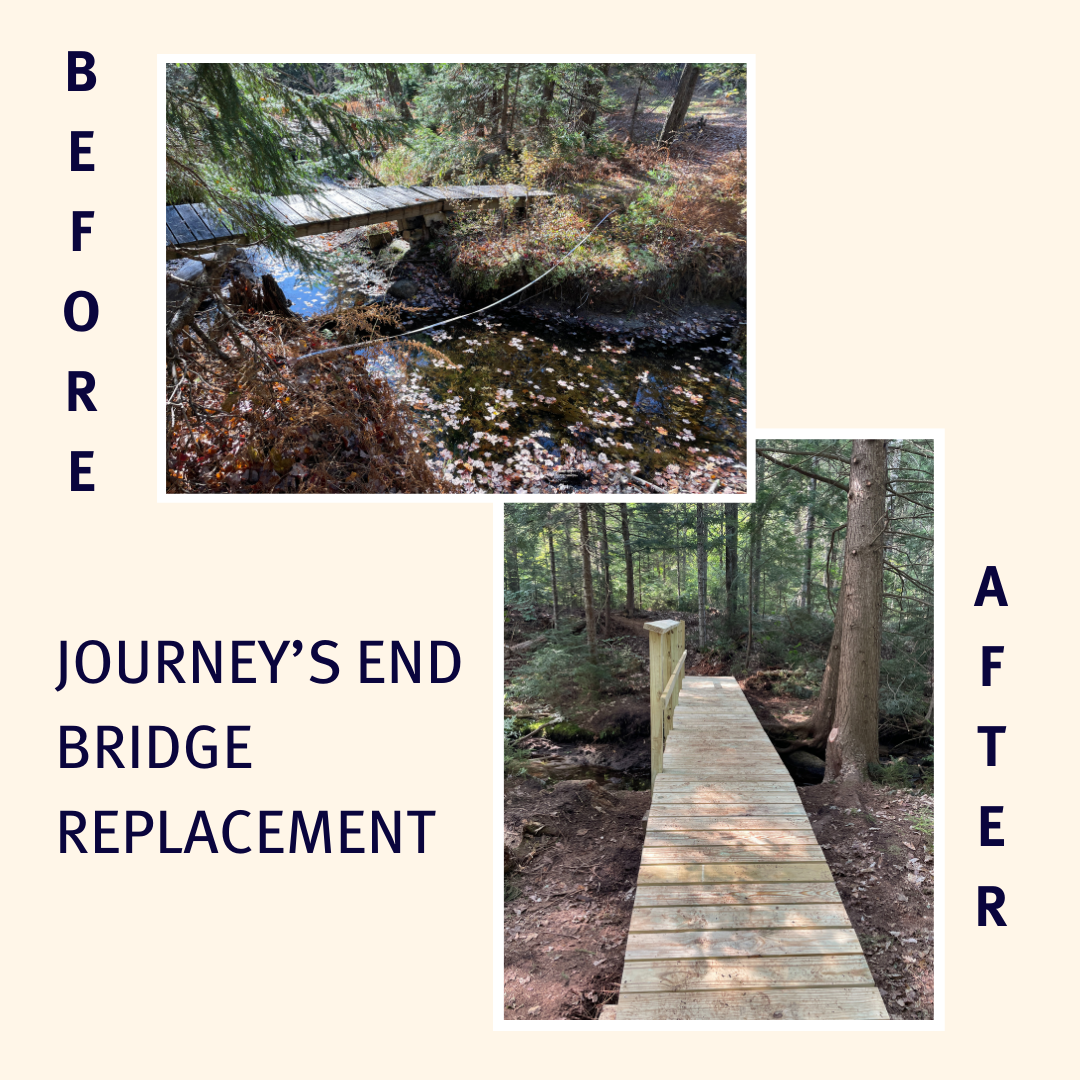
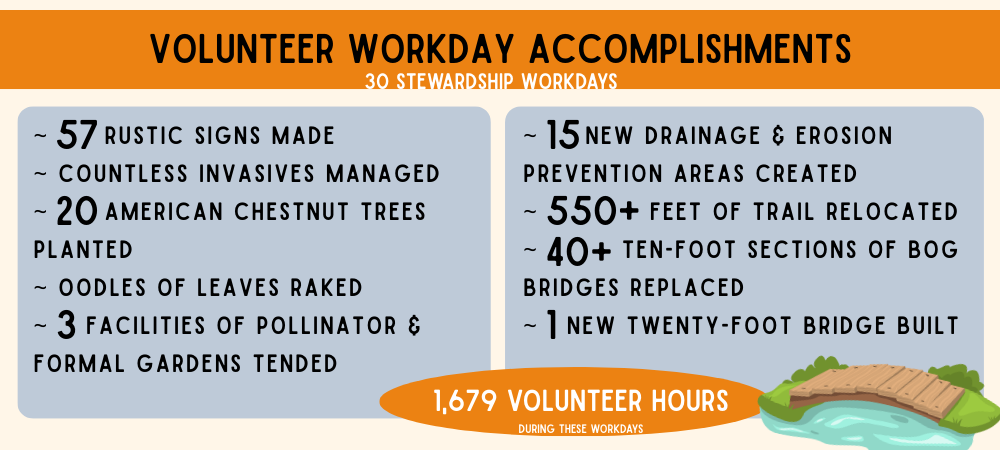
The 2025 field season encompassed 30 staff-led stewardship workdays with over 300 distinct volunteer day experiences. While some of these were repeat volunteers, there were 1,700 total volunteer workday hours given by the volunteer community – an increase of more than 300 hours from the previous year! While projects were all across the state, there were strong themes that emerged from this year’s stewardship experience: bridges, drainage, and relocated trails. Long term maintenance is crucial for bog bridges, larger foot bridges, and water drainage features – there are always some in line for repair or replacement.
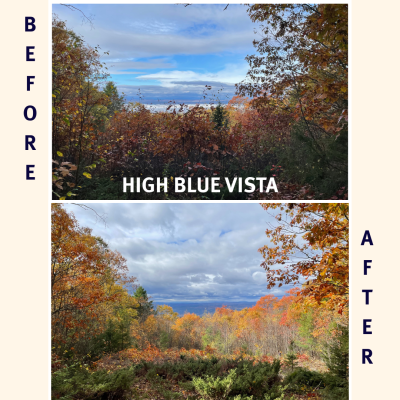
As mentioned earlier, staff need the support of volunteers to achieve stewardship goals. A special subset of volunteers, known as land stewards, train and assist with monitoring and basic stewardship tasks on properties across the state. Some even choose to work with staff to develop a project and then lead other volunteers in implementation. In 2025, there were more than six projects that were led by our trained volunteer land stewards at Heald Tract, Gap Mountain, Lamprey River Forest, Wenny Baker Forest, Quarry Mountain, and Cooper Cedar Woods. Projects included clearing overgrown vegetation from the trail corridor, removing debris from water drainage features on the trail, bog bridge repairs, signage improvements, and targeted invasive management. It is so incredible to have dedicated volunteers that go above and beyond to support improving the visitor experience!
Next year’s field season is sure to be another great one. We will be celebrating the 125th year of the Forest Society and the 20th annual Monadnock Trails Week. We would love to see you there! If you live further North, consider helping us as we continue to rebuild our volunteer community at The Rocks to support the educational programs, stewardship, and holiday-related events. Volunteers learn and share skills, create new connections, engage in a worthy cause for future generations, enhance their physical, mental and emotional well-being while outside.
Thank you to our volunteer crews that help keep New Hampshire New Hampshire!