
NH’s Land and Community Heritage Investment Program (LCHIP) Awards 31 Grants to Communities and Non-Profit Organizations Across the State
- Tags:
- Land Conservation,
- Clean Water,
- Wildlife
Powder Major Forest
Governor Kelly Ayotte joined the New Hampshire Land and Community Heritage Investment Program (LCHIP) Committee in announcing $3.5 million in matching grants to support 31 land conservation and historic preservation projects across the state. The grants will support efforts to rehabilitate 21 historic buildings and permanently conserve nearly 3,000 acres of farmland, timberland, and ecologically significant habitat in all corners of the state.
The Society for the Protection of New Hampshire Forests was awarded three grants that will support projects in Madbury, Nelson, and Springfield, together protecting nearly 1,800 acres.
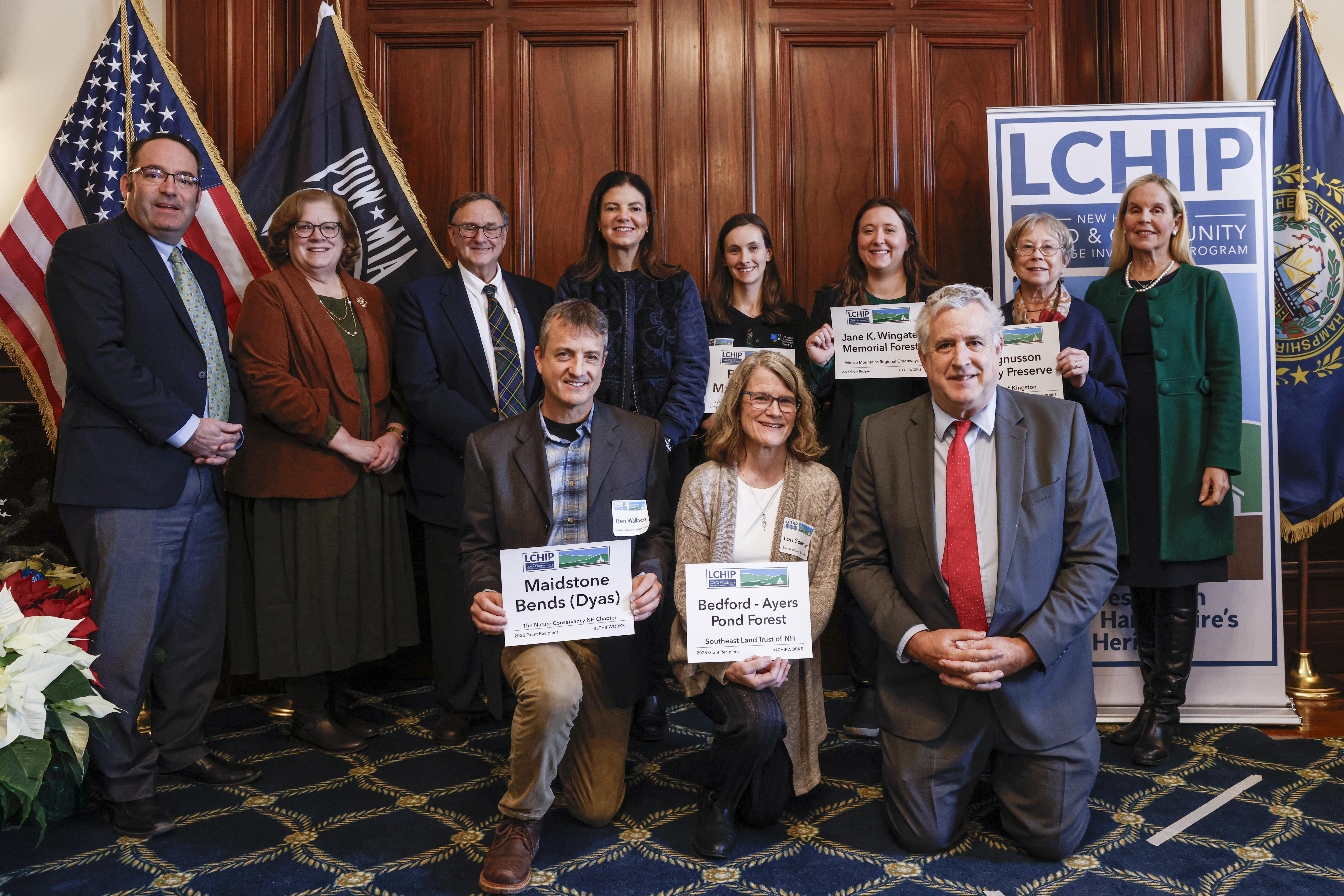
Land Conservation Project Manager Stacie Hernandez stands to the right of Governor Ayotte, alongside other LCHIP recipients.
Expanding Powder Major’s Forest in Madbury
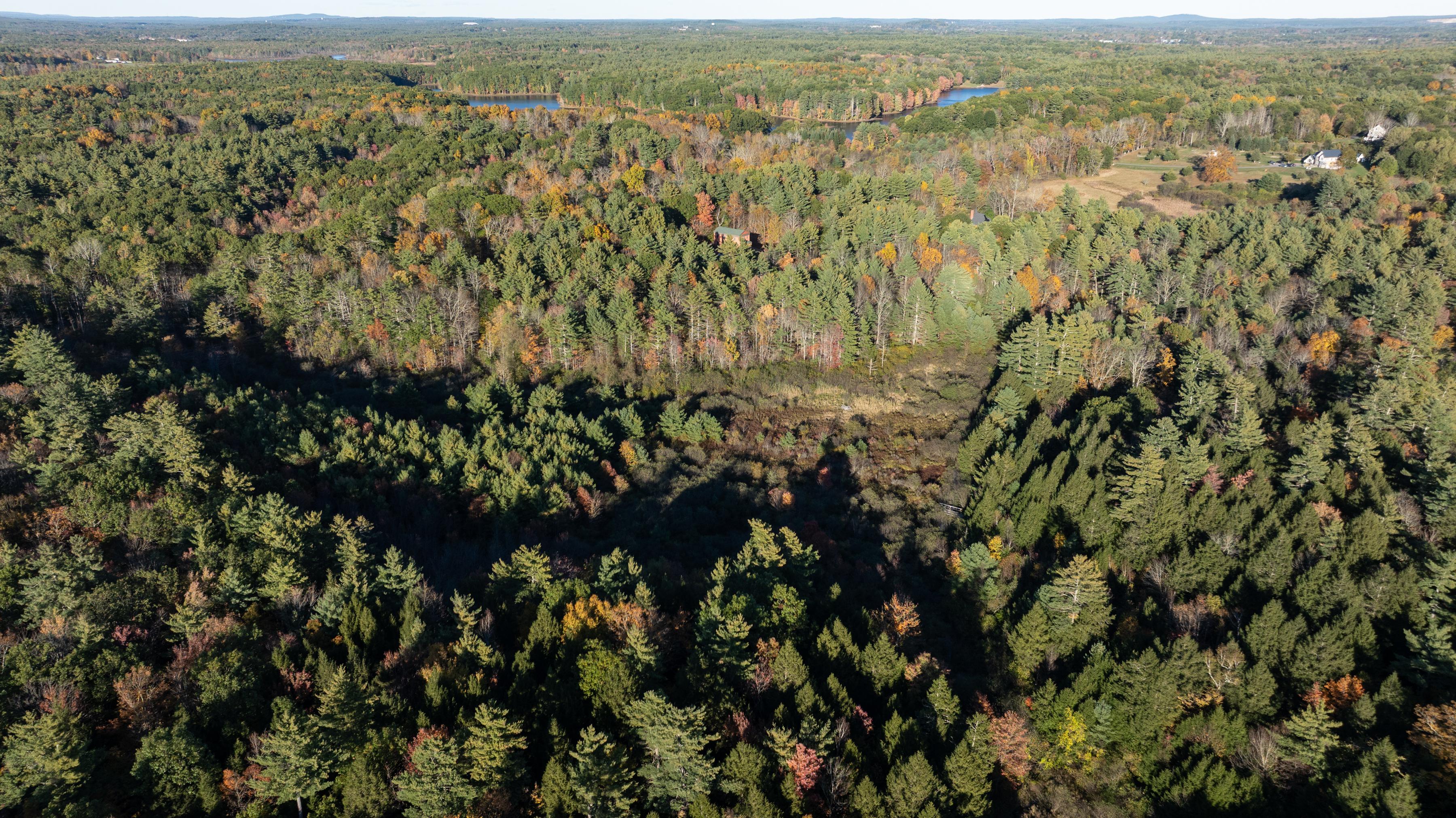
The Forest Society’s Powder Major’s Forest in Madbury was initially conserved in 2013, when the Forest Society purchased 192 acres located near the Moharimet Elementary School. Now, the Forest Society is working with a dedicated landowner to the north to acquire and conserve an additional 133 acres that extends all the way to Hayes Road in Madbury. This effort will bring the total protected area of Powder Major’s Forest to 325 acres. This property contains outstanding wildlife habitat and vital water resources, with much of the area in the Great Bay and Oyster River subwatersheds. There is more than 3,100 feet along Dube Brook, 2,600 feet of other small streams which are tributaries to the Oyster River. The Oyster River is the main source of drinking water for the Town of Durham and University of New Hampshire, making the protection of these stream buffers a direct investment in the region’s public health and future water security. LCHIP’s grant of $225,000 to the project will be matched by funds awarded through the NH Drinking Water Groundwater Trust Fund. To raise the balance of funds needed, a public fundraising campaign will launch in 2026.
Protecting the Remote Qualities of Nubanusit Lake in Nelson, Antrim, and Hancock
The Forest Society is embarking on a pivotal initiative to acquire and permanently conserve the 650-acre Nelson Highlands property in Nelson, Antrim, and Hancock. This acquisition is highly strategic, as it will be a major addition to the extensive network of conserved lands known as the Super Sanctuary. The Nelson Highlands sits directly in the heart of the Quabbin to Cardigan Conservation Focus area, which traces a critical south-to-north ecological spine from central Massachusetts through the Monadnock and Sunapee regions and up to the White Mountains. The property location, virtually encircled by existing conservation land, ensures maximum connectivity and protection of wildlife corridors. Remote in character, the property encompasses four peaks over 1,600 feet in elevation, offering diverse habitats. The land is managed for sustainable forest resources. The Forest Society and the Harris Center for Conservation Education will work together on this project over the coming year. A grant of $200,000 from LCHIP will be matched through a significant collaborative fundraising campaign in 2026.
Pillsbury Ridge Forest in Springfield
Located adjacent to Gile State Forest, Carter Brook Wildlife Management Area, and other conserved lands, the Pillsbury Ridge Forest encompasses 994 acres in Springfield, on the border with Grafton. This remote tract of land is primarily forested with a northern hardwood forest that has been sustainably managed for many years by a licensed forester. The high-elevation, rugged terrain on the property makes for a great wildlife habitat, including crucial habitat for wild Eastern Brook Trout. The property is used by hunters, and there is a snowmobile trail which connects directly into the extensive networks of Gile State Forest and Carter Brook Wildlife Management Area, enhancing local recreational opportunities. With a $200,000 grant award from LCHIP, the Forest Society has a strong foundation to raise the necessary matching funds and conserve this land as working forest and wildlife habitat. Additional fundraising to complete the project with continue through 2026.
“LCHIP grants provide essential anchor funding that allows ambitious conservation projects to succeed,” said Jack Savage, president of the Society for the Protection of New Hampshire Forests. “They leverage diverse funding sources and unite partners in a common purpose: to conserve New Hampshire’s forests, mountains, waters, and landscapes for the benefit of all. We are also thrilled to be part of LCHIP’s 25th anniversary celebration. The accomplishments of this program will endure for generations.”
LCHIP grant recipients must match each dollar contributed by LCHIP with at least one added dollar and complete the funded projects according to the program’s rigorous standards. This year’s $3.5 million awards will be matched by more than $13 million from other public and private sources, infusing $17 million into the state’s economy through direct project activity.